Nursery textiles · A practical guide
How to Choose Breathable Knit Layers for a Nursery
A cozy knit can make a nursery feel calm and welcoming, but softness is only the beginning. Fiber content, stitch structure, laundering instructions, and—above all—safe use all matter when choosing blankets and other textile layers for a baby.
Whether you are preparing for a new arrival or choosing a thoughtful baby gift, a little label-reading goes a long way. Here’s how to assess nursery textiles with a clear eye, without mistaking a plush feel for proof of performance or safety.
Start with the role of the layer
Before comparing fibers or stitches, consider where and how a textile will be used. A blanket for supervised cuddles in a caregiver’s arms has a different purpose from a sleep garment worn in a crib. A decorative throw for a chair is different again. The same piece of fabric may be lovely in one setting and unsuitable in another.
This distinction is particularly important for infants. A loose blanket, quilt, pillow, or other soft item should not be placed in an infant’s sleep space. For sleep, follow current guidance from your pediatrician and trusted public-health authorities: use a firm, flat sleep surface, keep the sleep area free of loose bedding and soft objects, and place baby on their back. A wearable blanket or sleep sack is not a loose blanket, but it still needs to be the right size and used according to its maker’s instructions and safe-sleep guidance.
In other words, a fabric described as breathable or a product made with natural fibers should never be treated as a guarantee of safe sleep. Breathability is one textile characteristic—not a substitute for appropriate sleep practices, supervision, or professional advice.
Read the fiber label, not just the front tag
The fiber content is a useful first clue to how a nursery textile may feel and how it should be maintained. Organic cotton is common in baby blankets and knit accessories because it can feel soft and is available in both light and substantial constructions. But “cotton” alone does not tell you whether a fabric is airy, warm, durable, or easy to wash. Those qualities also depend on yarn, stitch, fabric weight, finishing, and care.
Look for a clear statement of what the item is made from, including percentages when it is a blend. A label that says “100% organic cotton” gives more information than a broad phrase such as “natural feel.” If there are multiple fibers, note what each contributes and whether the manufacturer provides care instructions for the complete fabric. Blended materials may behave differently from a single-fiber textile during washing and drying.
Organic and certification claims deserve careful reading, too. A named certification can offer more specific information about standards than a general sustainability claim, but it does not establish that a product is appropriate for every infant or every use. Check the exact certification, the scope it covers, and the product’s intended purpose. Certifications related to fiber or production are not the same thing as a sleep-safety approval.
Some nursery items use wool, alpaca, or other fibers to provide warmth. These may be appealing as supervised-use layers or decorative accents, depending on their design and care requirements. If a baby has sensitive skin, a known allergy, or a particular medical need, ask a healthcare professional about suitable materials rather than relying on a product description alone.
Understand what knit construction can—and can’t—tell you
Knit structure affects a textile’s stretch, drape, surface texture, and general feel. An open or loose-looking stitch may seem airy, while a dense knit may feel more substantial. A ribbed edge can help a garment or blanket keep its shape; a textured stitch can give a throw a more pronounced hand. Still, appearance is not a dependable measure of how a fabric will perform in every room or on every child.
When assessing a breathable knit blanket, consider the overall construction rather than focusing on a single feature. Is the fabric light or heavy? Does it have a loose, open structure or a compact one? Does it feel flexible, or does it hold a rigid shape? Are there long loops, decorative ties, buttons, or other details that could be pulled or become loose? For anything intended to be worn, check that closures and openings are described clearly and that the fit is appropriate for the baby’s size.
Product descriptions can help you ask better questions. Details such as “fishbone stitch,” “rib-knit,” or “openwork” describe aspects of construction, but they do not automatically mean the textile is cooler, safer, or more durable. Even two items made from the same fiber may feel quite different because one is knitted tightly and the other loosely, or because one is heavier and more textured.
If you are shopping in person, gently examine the fabric and seams. Check whether the knit returns to shape after a light stretch, whether edges are neatly finished, and whether yarn ends appear secure. For online purchases, look for close-up product descriptions and complete specifications rather than making decisions from color or styling alone.
Look for practical details on a baby textile
Nursery textiles earn their place through real-life usefulness as much as their appearance. Babies and caregivers may need to wash items frequently, so care instructions should be easy to find and realistic for your household. A delicate textile that requires professional cleaning may be beautiful, but it calls for a different routine from a blanket that can go into a gentle home wash.
Before choosing, look for four basics:
- Fiber composition: The precise materials and, for blends, the percentage of each fiber.
- Construction: Knit or weave type, finishing details, and any closures or decorative components.
- Care guidance: Recommended water temperature, cycle, drying method, and ironing advice.
- Origin and claims: Where the item was made and what any stated certifications actually cover.
These details make it easier to compare like with like. They also help you spot vague descriptions that lean heavily on words such as “luxurious,” “gentle,” or “eco-friendly” without explaining the material or how to care for it. Those words may describe a brand’s intended feel, but they are not a substitute for the specifications.
Choose laundering instructions you can follow
Care is part of the decision—not an afterthought. A baby blanket that is used regularly may need frequent washing, so an item’s care label should fit the time and equipment available at home. Follow the maker’s directions rather than assuming that all cotton knits can be washed in the same way.
Some organic cotton knits specify a cold, gentle wash with similar colors, followed by low-heat tumble drying and prompt removal. Others may recommend a different method. Avoid treating one product’s care instructions as a rule for another, even if both are cotton. High heat, vigorous cycles, or leaving damp fabric in a washer can affect texture, shape, or color; the correct approach depends on the item’s construction and label.
Before the first use, wash a baby textile if its maker recommends it, using a suitable detergent and the stated cycle. Keep the product label or save a note of the care instructions, particularly if you receive the item as a gift. After washing, inspect seams, fasteners, and knit edges. Retire an item if it becomes damaged or develops loose parts.
Easy-care does not mean indestructible. Gentle laundering, prompt drying, and sensible storage can help preserve softness and shape over time. For a garment with buttons or a placket, check that fasteners remain secure after laundering and that there is no damage that could create a hazard.
Blanket, wearable layer, or keepsake?
Not every knit layer has the same job. A blanket can be useful for supervised cuddling, stroller use when appropriate, or as a decorative nursery accent, depending on the product and the circumstances. A wearable sleep sack is designed to be worn, not laid loose over a baby. A keepsake blanket may be chosen for its meaning and saved for supervised moments rather than used as crib bedding.
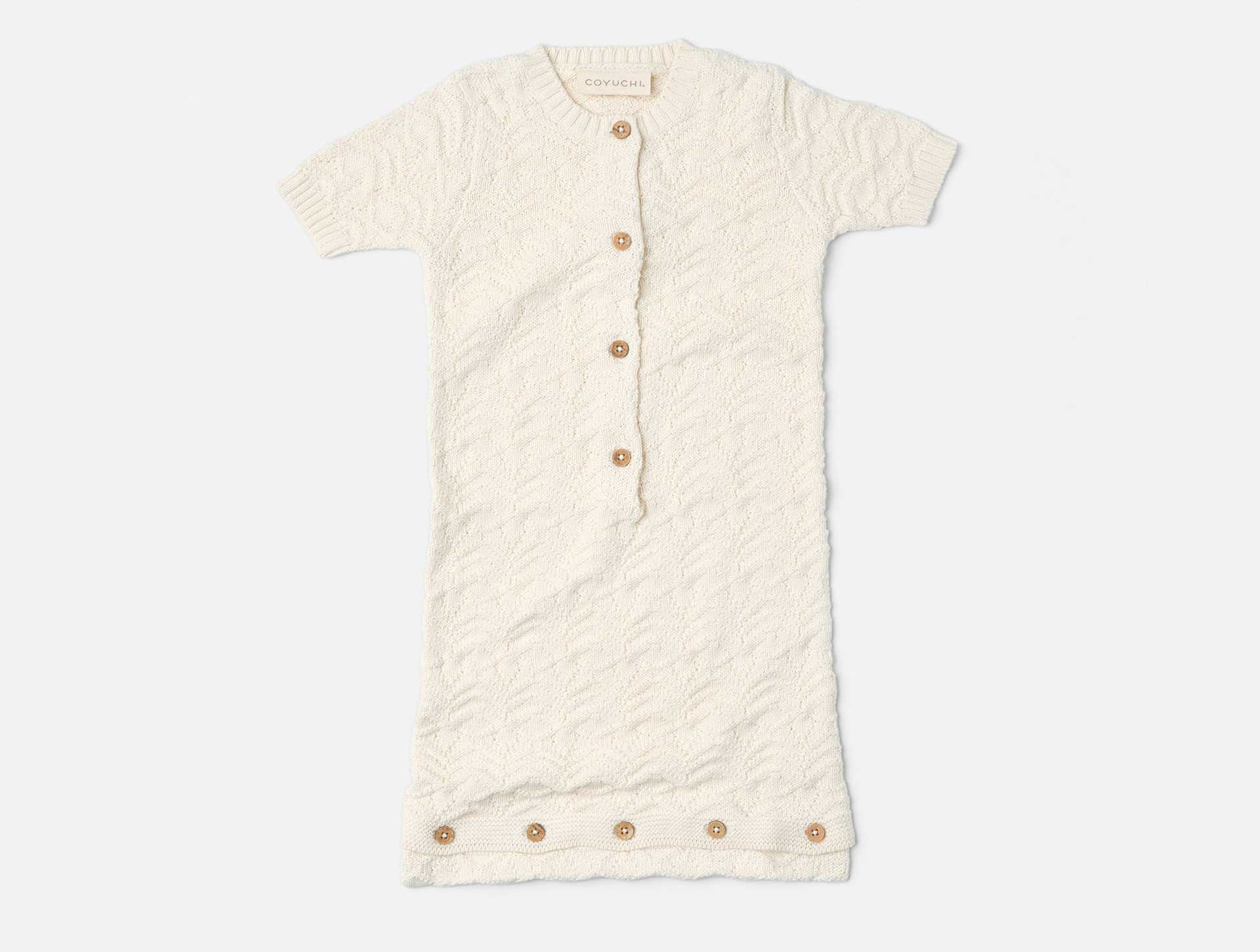
The Wren Organic Knit Snuggle Sack, for example, is described as a 100% GOTS-certified organic cotton knit garment with a front placket button closure and a bottom opening for changes. Its product information also lists a subtle knit texture, rib-knit details, machine-washable care, and production in India, with Fair Trade Certified factory information. These are useful details for understanding its material and construction. They do not, on their own, establish that it is suitable for every baby or every sleep environment. Caregivers should check the garment’s sizing, follow its instructions, and consult current safe-sleep guidance.
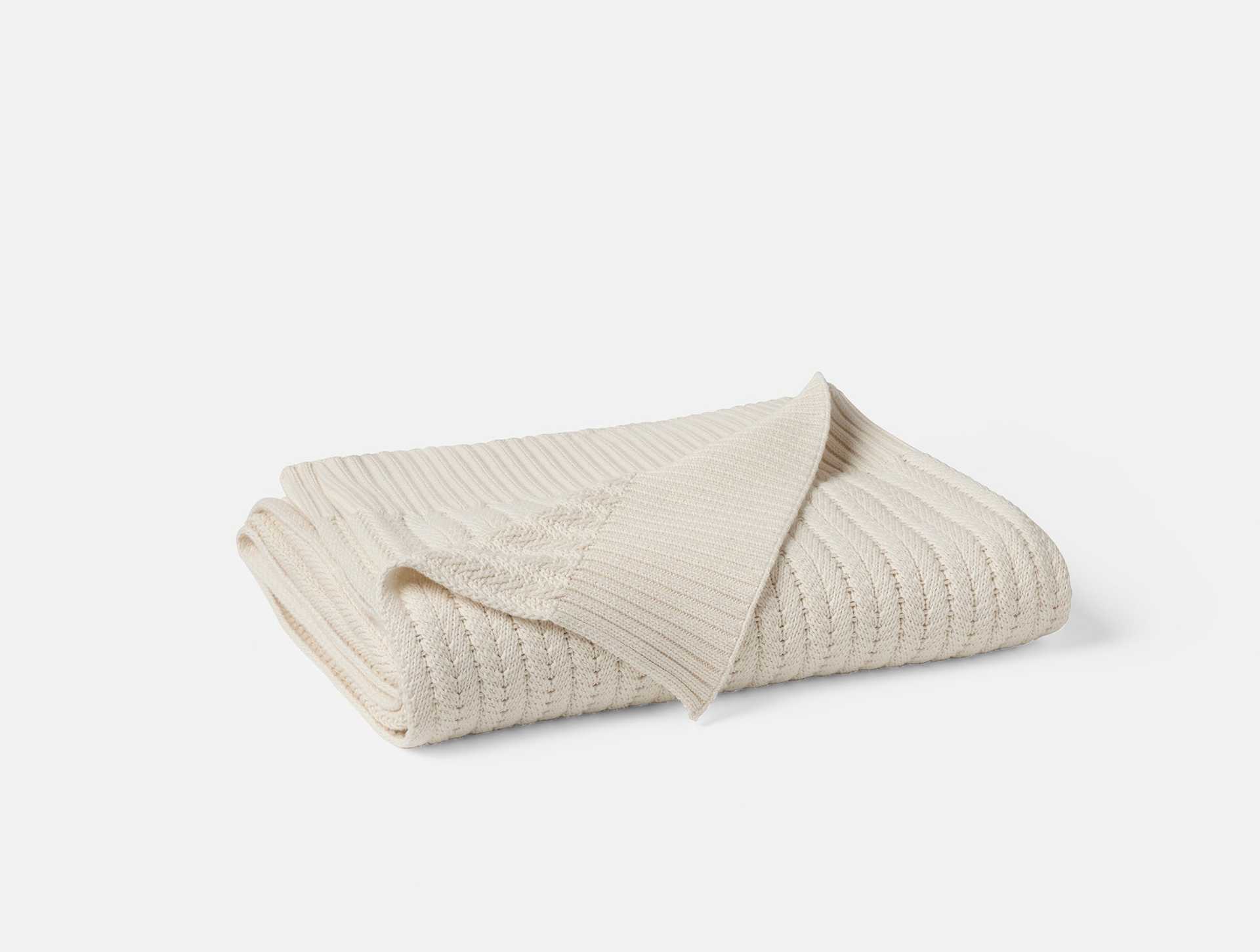
For a blanket rather than a garment, the Casa Loma Organic Knit Throw is described as 100% organic cotton, with a fishbone stitch and a 2x2 ribbed hem. Its stated dimensions are 50 by 70 inches, and its care directions specify a cold, gentle wash and low-heat tumble drying. Those specifications help a reader understand the fabric and upkeep. The throw is an adult-sized home textile, so its dimensions and intended use should not be confused with a recommendation for infant sleep bedding.
That kind of distinction makes a gift more thoughtful, too. If you are giving a textile to new parents, include the product’s care information and describe it accurately: a decorative throw, supervised-use blanket, or wearable garment, as appropriate. Let the parents decide how it fits their routine, and avoid presenting any item as a solution to infant sleep or temperature concerns.
Think about warmth in context
“Cozy” can sound like an uncomplicated compliment, but babies need to be dressed appropriately for their surroundings. A thick fabric, extra layer, warm room, and snug fit can combine in ways that are not obvious from a product page. A fiber name alone cannot tell you whether a garment will be comfortable in a particular climate or on a particular child.
Use the manufacturer’s guidance for the product and follow advice from your baby’s healthcare provider, especially if your child was born prematurely or has health concerns. Check the room and the baby rather than relying solely on how a textile feels in your hands. If you are unsure about clothing layers or signs of overheating, ask a clinician. Breathable construction may be one consideration, but it is not a replacement for that individual guidance.
For nursery décor, a lighter knit can be useful as a visual or tactile accent without needing to serve as a sleep layer. A throw draped over an adult chair or folded outside the crib can add texture while staying separate from the baby’s sleep space. Keeping the roles clear helps prevent a lovely decorative textile from being used in a way it was not designed for.
A quick label-reading checklist
When comparing nursery textiles, pause for a short, practical review. It can help turn an appealing first impression into an informed choice:
- What is the exact fiber content, and are blends clearly identified?
- Is the construction described in enough detail to understand the fabric’s texture and finish?
- Does the care label match the way you can realistically wash and dry the item?
- Are the product’s dimensions, intended use, and closures clearly stated?
- Are certification and origin claims specific rather than vague?
- Is this intended for supervised use, décor, or wear—and is that purpose clear?
- If it is a garment, does the maker provide sizing and use instructions?
- Have you kept loose blankets, pillows, and other soft objects out of the infant sleep space?
A clear “yes” to these questions does not make a product perfect for every family, but it gives caregivers a better foundation for choosing and caring for it. When essential information is missing, contact the maker before purchasing or select an item with fuller specifications.
The best choice is the one you understand
A nursery knit layer can be soft, useful, and beautiful without needing to promise more than it can deliver. Fiber content tells you what the textile is made from. Knit construction offers clues about texture and drape. Care instructions show what it will take to maintain the piece. Origin and certification details can add context about production. Each fact is valuable, but none should be stretched into a claim the label does not make.
For caregivers, the most reassuring purchase is often the one with straightforward information: a clearly identified material, a construction you can assess, realistic laundering directions, and an intended use that makes sense. Keep decorative blankets separate from the infant’s sleep space, use wearable products only as directed, and seek professional guidance when you have questions about a baby’s health or sleep.
That careful approach leaves room for the pleasure of choosing a lovely knit while keeping the priorities in order. The right nursery textile is not simply the softest thing on the shelf. It is a well-understood layer, selected for the job it is meant to do and cared for with the baby’s needs in mind.